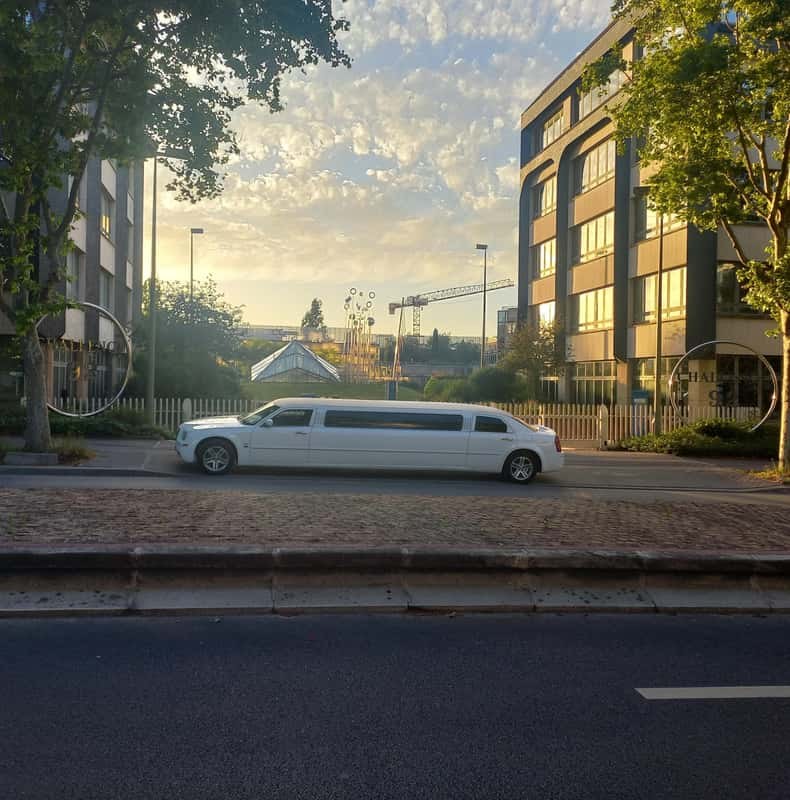
Tour of Paris by limousine by day or night.
PrivateUp to 8
The one built to run after dark, which is what a December arrival at four in the afternoon actually wants.
From $302 per group of up to 8
Three things, in order of how much they matter to a visit measured in hours.
Daylight. Eight hours in December, sixteen in June. On a connection that is the difference between a route and half a route.
Opening hours. The Eiffel Tower runs to midnight in high summer and to eleven otherwise. The Arc de Triomphe closes at half past ten in winter and eleven in summer. Sacré-Cœur does not change at all.
Crowds and closures. Queues triple between June and August, and four public holidays close the Arc de Triomphe outright.
September, and not narrowly. It keeps thirteen hours of daylight and warm afternoons while the summer crowds thin from the middle of the month, and nothing is closed.
April and May are the close second: slightly shorter days, slightly smaller queues, and gardens that have just come back. The only caution in May is the pair of public holidays that shut the Arc de Triomphe.
Long and busy. Sixteen hours of light means a route that starts at six in the evening still works, which is a genuine advantage for an awkward arrival time.
Against that: peak queues at every ticketed monument, temperatures around 25 °C, and August, when Paris empties of Parisians and fills with visitors. The traffic is lighter in August and the restaurant options are thinner, because many close for the month.
Yes, for a different product. The monuments are at their emptiest, the fares are the same, and the city after dark is the version most photographs are of.
What you have to accept is the light. In December the sun is up from about 08:40 to 16:55, so an arrival at three has ninety minutes of daylight and then a lit city. Plan a lit route rather than a daylight one and winter stops being a compromise.
| Month | Approximate daylight | Latest useful arrival for a day route |
|---|---|---|
| December | 08:40–16:55 | About 13:00 |
| February | 08:00–18:20 | About 14:30 |
| April | 07:10–21:00 | About 17:00 |
| June | 05:50–21:55 | About 18:00 |
| September | 07:10–20:15 | About 16:00 |
| November | 07:50–17:00 | About 13:00 |
See Paris Layover tours that run year round
Read the third column as the latest arrival that still leaves a daylight route after the border queue and the drive. Land later and the answer is not to stay in the terminal — it is to take the lit route instead.
Not a month, but two windows and one day.
Late October into November is the weakest stretch. The clocks go back in the last week of October and sunset drops to about a quarter to six overnight, so an afternoon arrival that worked comfortably in September stops working. October is also the wettest month of the year on average. The compensation — empty monuments — has not arrived yet, because the queues do not really thin until December.
The first three weeks of August are the busiest at every ticketed monument, and many of the restaurants you might have stopped at are closed while their owners are elsewhere. The traffic is genuinely lighter, which helps a drive-by route, but anything involving a door is at its worst.
14 July is the one date to move if you can. The parade closes the Champs-Élysées and the surrounding streets from early morning, the Arc de Triomphe is shut, and the evening fireworks close the area around the tower. A tour still runs and the driver will reroute, but you are paying full price for a restricted version of the route.
Everything else on the calendar is a trade rather than a problem. Short days buy you empty monuments; long days buy you queues; and the drive-by route that most layovers take is barely affected by either.
None of these stops a drive-by route. All of them ruin a plan built around one building, which is the argument for keeping a short layover flexible.
Between eleven in the morning and two in the afternoon, from June to August, at every ticketed monument. That is when the coach tours land and the queue at the Eiffel Tower stops being measurable.
The counter-move is the same in every month: be in the city before nine. Empty streets, no coaches, and a basilica that has been open since half past six.
Less than you would think, because you are in a car. Rain adds twenty to thirty minutes to a transfer from Charles de Gaulle and shortens how long you want to stand at each stop; it does not close anything.
That is the quiet argument for a private car over the train in January. Travellers who have done these tours in poor weather still describe seeing everything on the list, which would not be true on foot.
The lights go up along the Champs-Élysées from the middle of November and stay through the first week of January, and one operator sells a Christmas lights version of its standard route.
An evening layover in December is genuinely one of the better ones available: the avenue lit, the tower on the hour, and none of the summer queues. The only cost is that the daylight is gone by five.
The departures run identically all year, but three things about them shift with the calendar, and none of it appears in the price.
Availability. Summer connections fill first, and the four-seat vehicles fill before the larger ones. A July layover booked in May has a choice; the same layover booked in late June often does not.
Route length. A five-hour tour in June covers its full stop list in daylight. The same five hours in December runs half in the dark, which is not worse — the lit monuments are the better photograph — but it is a different afternoon and worth expecting.
What the driver suggests. Drivers reroute around the season without being asked: the gardens in May, the covered arcades in February, the lights in December. Say what you care about at pickup and the route will bend to it, which is the single advantage a private car has over any fixed itinerary.
One seasonal product exists outright. The operator of the five-hour airport tour sells a Christmas lights version of its route from late November, which is the same drive with the evening timing and the avenue as the centrepiece. If you are landing in December after dark, ask for it by name.
| If you want | Go in | Because |
|---|---|---|
| The easiest all-round layover | September | Long light, warm, thinning crowds |
| Maximum daylight | June | Sixteen hours, and an evening route still works |
| Empty monuments | January or February | Shortest queues of the year |
| The lights | Late November to early January | The avenue is lit, and one route follows it |
| Gardens | April to June | Everything is out, and the light is long |
| To avoid a closure | Any month, not a Monday or Tuesday | Versailles, then the Louvre |
Four times a year Paris does something to itself that changes a layover route, and none of them appears on a weather forecast.
14 July. The military parade closes the Champs-Élysées and much of the eighth arrondissement from early morning, and the Arc de Triomphe is shut. The fireworks close the area around the tower in the evening. A drive-by route on that date has to be rebuilt around the river and the left bank.
The last Sunday in July. The Tour de France finishes on the avenue, with road closures across the centre from the middle of the day. Travellers on these tours have run into it and the drivers rerouted around it, but it costs stops.
Fashion weeks, late February and late September. Traffic in the first and eighth arrondissements thickens noticeably and hotel pickups run late. It affects a city-start tour more than an airport one.
The first weekend of the school holidays, in July and at the end of August. The A1 out to Charles de Gaulle and the périphérique both slow, and a transfer that normally takes an hour can take ninety minutes in each direction.
None of these should stop you booking. All of them are worth ten seconds of checking against the date on your ticket, because the fix — a different route, or an extra half hour of buffer — is free if you know in advance and impossible if you do not.
The one built to run after dark, which is what a December arrival at four in the afternoon actually wants.
From $302 per group of up to 8

Buy the hours the daylight gives you: two in December, five in June, from the same listing.
From $356 per group of up to 7

A twelve-hour day that only works on a long summer stopover, with the abbey entrance inside the fare.
From $1056 per group of up to 7
For the hour-by-hour version of this, see Paris layover itineraries by the hour, and for the month-by-month figures themselves, the Paris layover weather page. Paris Layover Tours lists what runs when.