
Paris Airport Layover Tour
Airport pickupPrivateWi-Fi on board
Eleven named stops in four hours, which is the densest itinerary sold here, with an hour of airport waiting time in the fare.
From $318 per person
Every route below starts and ends at an airport door, and the hours quoted are tour hours rather than connection hours. To turn one into a connection, add 45 minutes for the border on arrival and three hours for the return buffer.
So a four-hour route needs a connection of about seven and three quarter hours to be comfortable, and six hours to be possible. That gap between comfortable and possible is the whole subject of this guide.
One cluster, done properly, plus the drive. Four hours is the shortest airport-door tour sold here and it is a real afternoon rather than a token one.
The route: Montmartre and Sacré-Cœur, 25 minutes on foot · the Opéra and Place Vendôme from the car · the Louvre pyramid, 20 minutes · Place de la Concorde, passing · the Champs-Élysées · the Arc de Triomphe, 15 minutes · the Eiffel Tower, 30 minutes.
What you give up: going inside anything, and the river. This route never crosses to the left bank.
An hour of slack, which sounds modest and is not. Five hours is where the route stops being a schedule and starts being an afternoon: the stops get their full minutes, the driver can take a diversion, and a coffee stop stops being a sacrifice.
The route: the four-hour list, plus 35 minutes at the tower instead of 30, 45 on the hill instead of 25, and five-minute photo stops at Place Vendôme, the Palais Garnier and Concorde. About two and a quarter hours on the ground.
Two clusters, and the river between them. This is the first length at which Paris feels like a place rather than a list of monuments.
The route: the western cluster — Trocadéro, the tower, Les Invalides, the Pont Alexandre III — then across to the central one for Concorde, the Louvre and the Palais Garnier, and up to Montmartre to finish. About three and a half hours on the ground.
What it needs: a connection of nine to ten hours, or a start in the city rather than the terminal.
Yes, and exactly one thing. At eight hours the fixed costs still take five and three quarters, leaving a comfortable four to five in the city — a full route plus one interior, or a full route plus a proper meal, but not both.
| Interior | Time needed | Cost | Worth it on eight hours? |
|---|---|---|---|
| Palais Garnier | About 60 min | Ticketed | Yes — rarely queued |
| Notre-Dame | About 40 min | Free, timed slot | Yes, with a slot booked |
| Arc de Triomphe terrace | About 45 min | €16–22 | Yes |
| Eiffel Tower, second floor | About 120 min | €23.50 | Only with a slot |
| Louvre galleries | About 120 min | €22–32 | No |
See Paris Layover tours that fit eight hours
The open day. At ten hours the tour stops being a loop and becomes a plan you set: the private ten-hour departures here let you build the route, and that is worth more than any fixed itinerary at this length.
A ten-hour shape that works: the western cluster in the morning, lunch near the Louvre at noon before the kitchens fill, the central cluster and one interior in the early afternoon, Montmartre at four when the light is best, and back at the terminal by six.
On twelve hours, yes. The palace is about an hour from Charles de Gaulle in good traffic and a visit worth making needs three hours on top, so the round trip is five hours of your day.
Two caveats decide it. Versailles is closed on Mondays, and the drive is the one leg where traffic can cost you an hour without warning. If your connection is twelve hours and it is not a Monday, it is a real option; at ten hours it is a gamble.
Giverny is about 75 minutes each way and open from April to October. On a twelve-hour connection it is comparable to Versailles and considerably quieter.
Mont-Saint-Michel is a twelve-hour day in its own right, which means it needs a stopover with a night in it rather than a connection. The departure that covers it includes the abbey entrance fee, which nothing else here does.
The geometry inverts. From Charles de Gaulle you come in from the north-east, so Montmartre is on the way and the tower is the far end. From Orly you come in from the south, so the left bank and the tower come first and the hill is the detour.
A four-hour Orly route: the Eiffel Tower and Trocadéro, 35 minutes · the Pont Alexandre III and Les Invalides, 15 · the Louvre courtyard, 20 · Île de la Cité and Notre-Dame, 30 · back south. About an hour and forty on the ground, with a shorter drive at each end than the same tour from the north.
That shorter drive is the whole advantage. Orly sits about nine kilometres closer, so the round trip saves roughly forty minutes — which at four hours is another full stop, and at six hours is the difference between a rush and an afternoon.
The cost is choice. Far fewer layover departures collect at Orly, so book earlier and expect a shorter list. What you should not do is book a Charles de Gaulle tour and hope the operator will drive south for you; ask first, in writing.
The one that starts on the hill. Sacré-Cœur opens at half past six and nothing else of size opens before nine, so an arrival at 06:20 has one sensible first move and it is Montmartre.
Run the rest of the route in reverse from there: the hill at seven, the centre as it opens at nine, the tower at ten, and back to the terminal before the traffic builds. It is the most productive version of any of these routes.
The river, and only the river. After dark the interiors are shut and the drive-by route becomes the better product: the tower lit, the bridges empty, the Champs-Élysées at its best.
Sacré-Cœur stays open until half past ten, the Eiffel Tower until eleven or midnight, and the Arc de Triomphe until half past ten or eleven. That is a genuine evening, and it is the only window in which the one-hour limousine run makes sense.
| Tour length | Connection needed | Clusters reached | Interiors | Ground time |
|---|---|---|---|---|
| 1 hour | 4 hours, from the city | One, from the car | None | 10 min |
| 4 hours | 6 hours | One and a half | None | About 90 min |
| 5 hours | 6 to 8 hours | Two | None | About 135 min |
| 6 hours | 9 hours | Two, plus the river | One, if pre-booked | About 210 min |
| 10 hours | 13 hours | All four | One or two | About 6 hours |
| 12 hours | Overnight | Versailles or Normandy | The day trip itself | 8 hours |
See every Paris Layover tour and its hours
Work backwards. It is quicker than working forwards and it produces a plan that survives contact with the day.
Start at your departure. Subtract three hours for the terminal. That is the time the car must leave the city.
Subtract the drive out. An hour from central Paris, ninety minutes in a wet rush hour. That is your last stop's finishing time.
Now go forwards from your arrival. Add 45 minutes for the border and an hour for the drive in. That is your first stop's starting time.
What sits between the two numbers is your route. Divide it by the minutes in the tables above and you have your stop count, honestly, before anybody has sold you anything.
A worked example. You land at 09:15 and leave at 19:40. Departure minus three hours is 16:40; minus the drive out is 15:40 in the city. Arrival plus 45 minutes is 10:00; plus the drive in is 11:00. You have four hours and forty minutes on the ground, which is a six-hour tour and one interior, or a five-hour tour and a proper lunch.
Do this before you look at a single listing. It turns the question from "which tour is best" into "which tour is four hours and forty minutes", and that is a question with two or three answers rather than ten.
Eleven named stops in four hours, which is the densest itinerary sold here, with an hour of airport waiting time in the fare.
From $318 per person

Seven stops in four hours including a full hour on the hill, priced per person and collected in the city.
From $142 per person
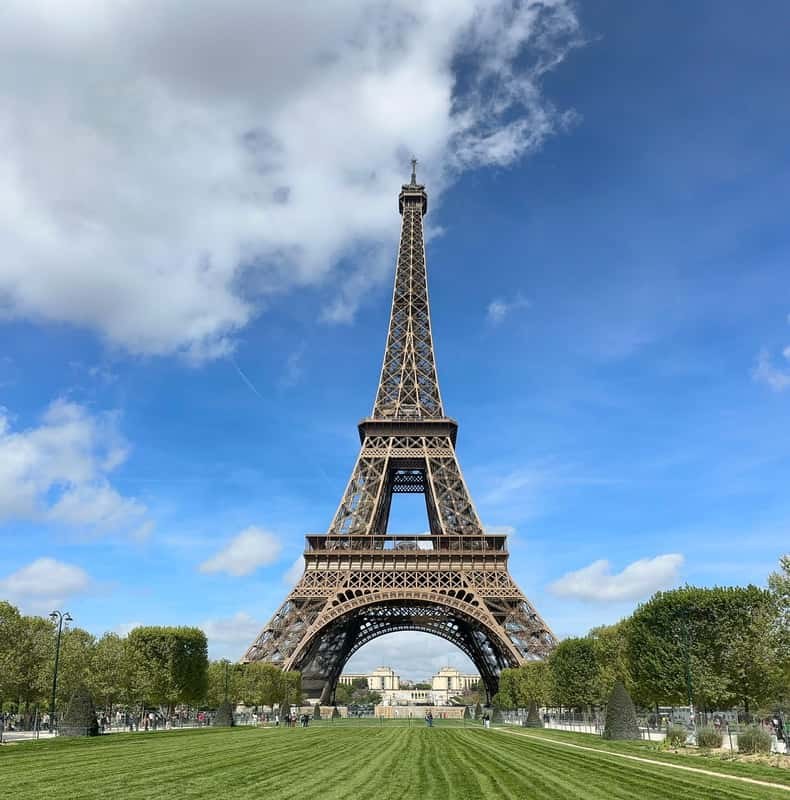
Four hours in the shape this guide recommends for an early arrival: Montmartre first, the tower last.
From $417 per group of up to 3
If you are still choosing a format rather than a route, start with choosing a Paris layover tour. For what the light does to these routes, see Paris layovers through the year. Paris layover tour from the airport lists what you can book, and Paris Layover Tours puts the hours and the fares next to each other.